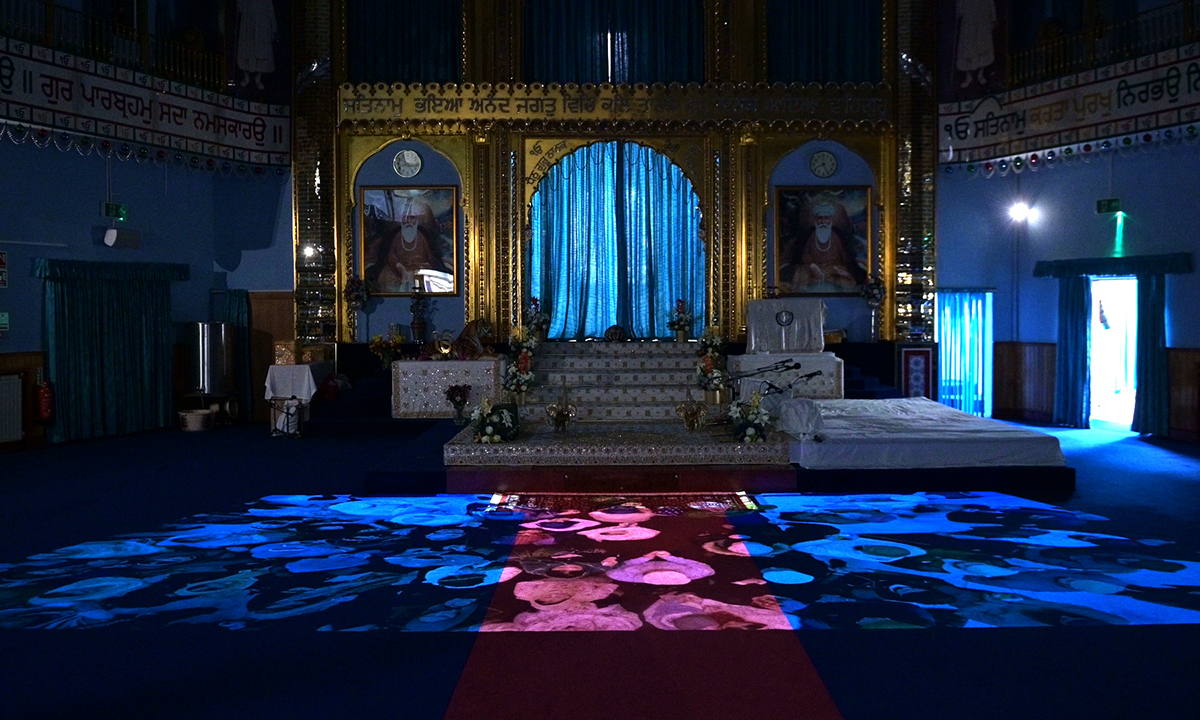
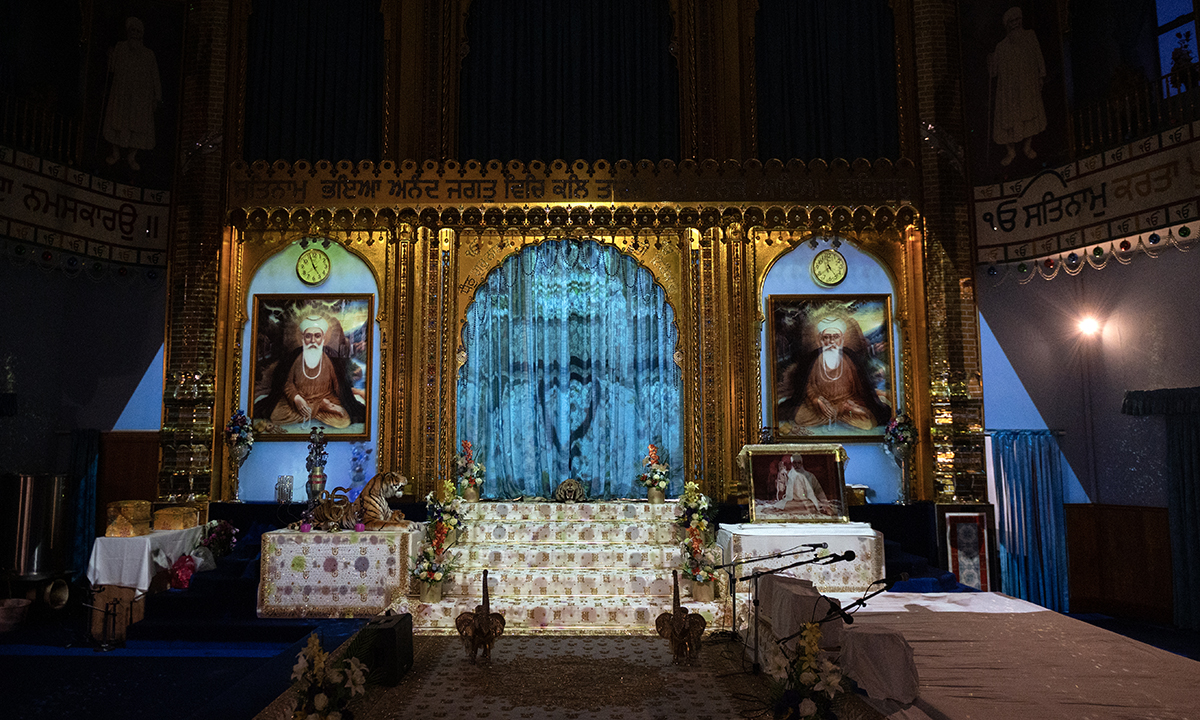
Moving Pictures explores how migrant faith communities across England transform former cinemas into active spaces of worship and collective gathering. At Nanaksar Gurdwara Gursikh Temple, the former Star Picture Palace, the gurdwara is encountered not simply as a building, but as a place continually brought into being through shared listening, collective movement and devotional practice. Paath and Shabad Kirtan fill the hall; sound settles in the body and draws people into shared forms of attention. These intangible practices leave no fixed trace, yet they are what make a place feel held, inhabited and alive.
More Info
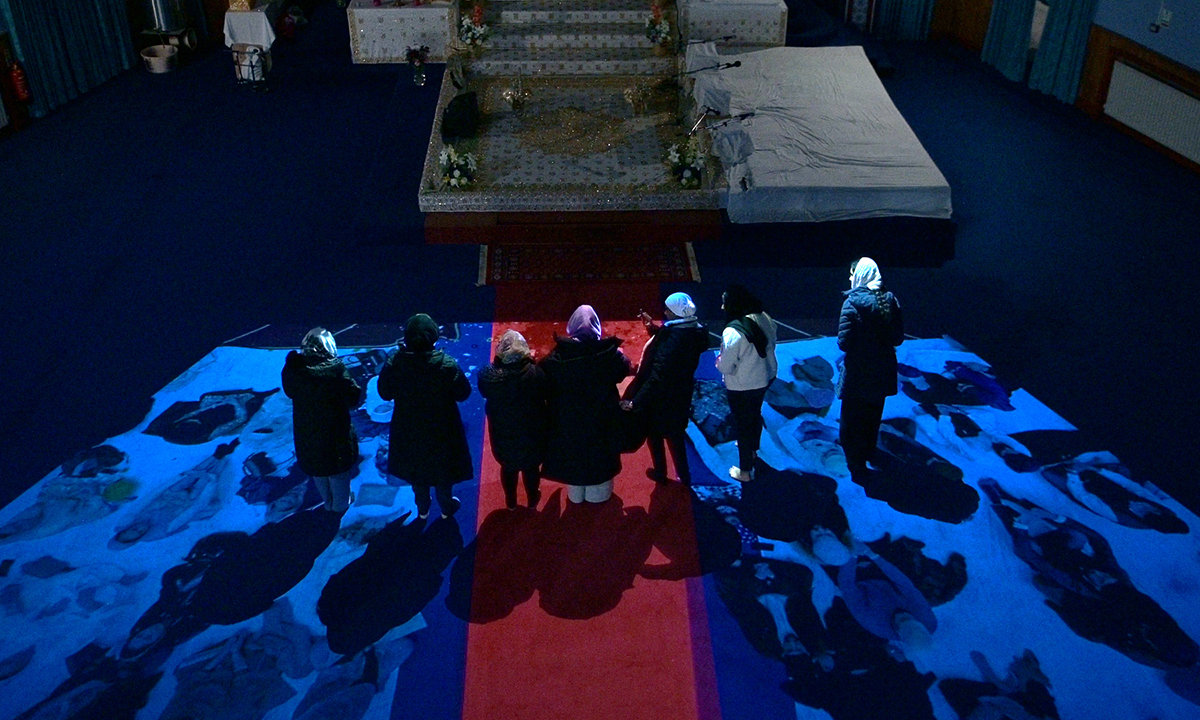
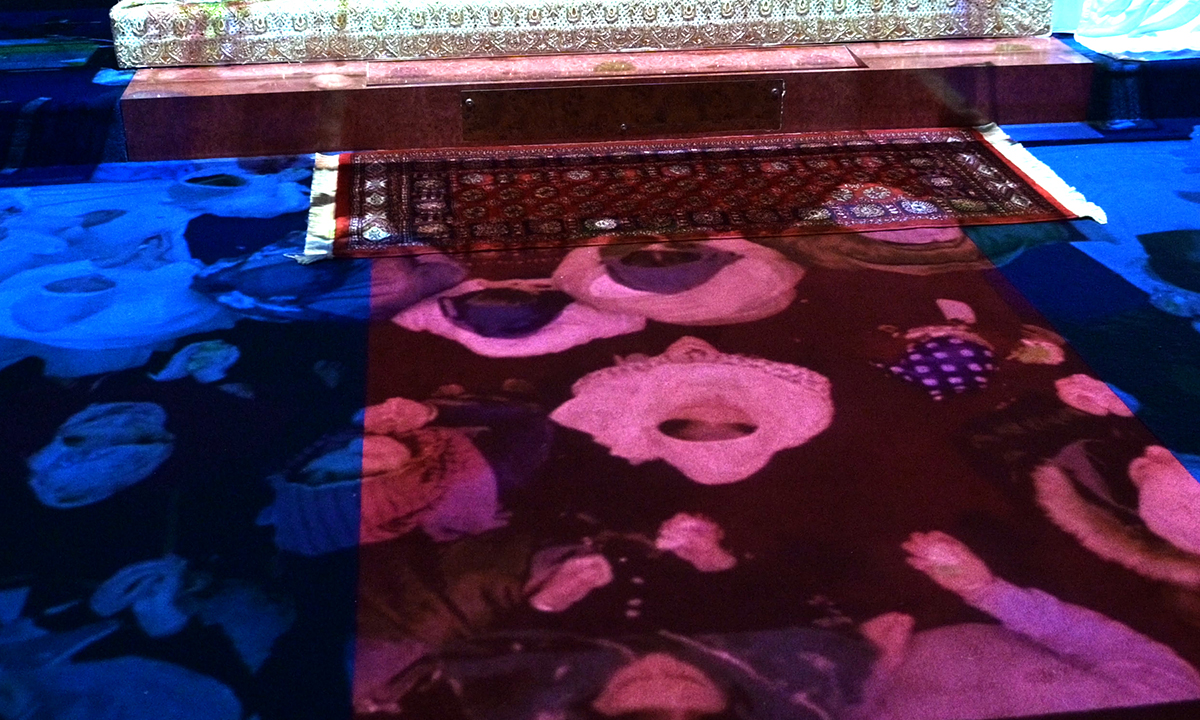
Developed through the site-integrity methodology, a bespoke filming and projection device emerged through an ongoing negotiation with the temple's material, architectural and devotional conditions. Responding to ritual protocols, the acoustics of the prayer hall, patterns of movement within the sangat and the congregation's own knowledge of the space, the apparatus records Pooranmashi (the full moon celebration) from above. The viewpoint is not neutral but shaped by the customs and rhythms of worship itself. The camera moves with the cadence of Paath and the rise and fall of Kirtan, revealing moments of collective attention and the shared gestures through which belief becomes visible, including the instant flowers are cast into the air as an offering. The same device used to film returns the moving image to the temple through projection. Scale, duration and spatial relationships are preserved so that image, sound and architecture resonate together. Rather than a conventional screening, Moving Pictures becomes a performative encounter in which film remains inseparable from the place that produced it. Audience and congregation enter a shared field of attention where watching and being present begin to blur, and where cinema returns to one of its earliest conditions: a collective experience of gathering, immersion and exchange.
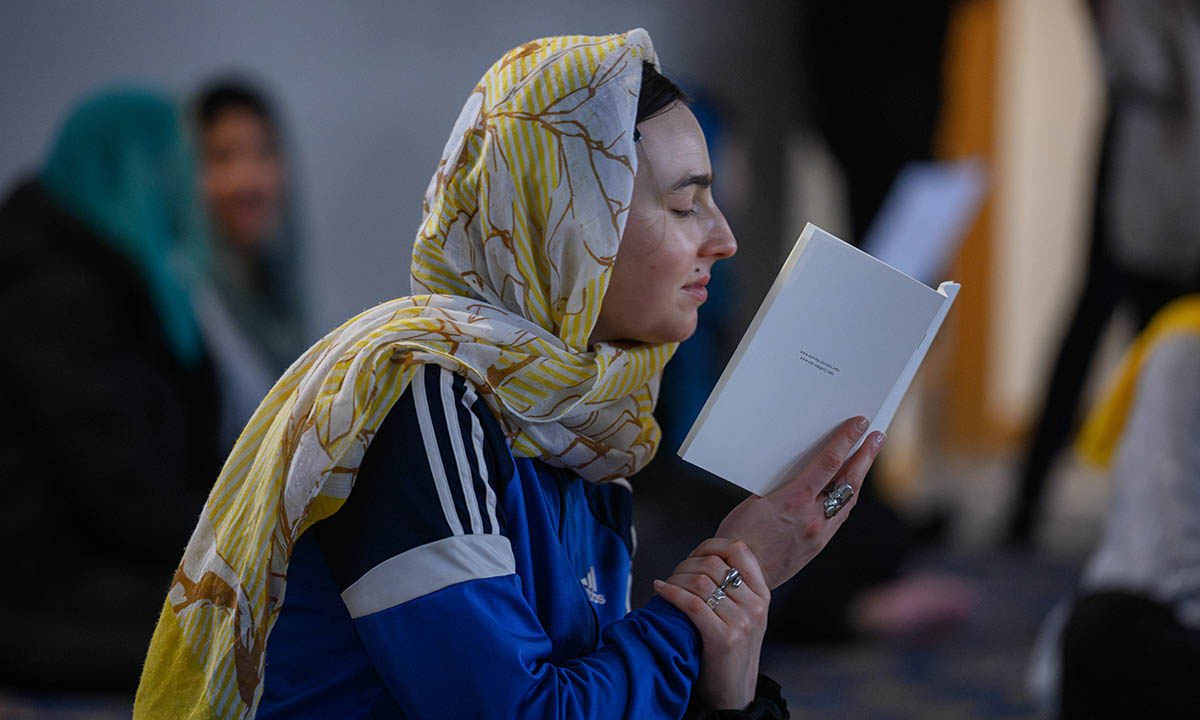
The work formed part of the Coventry Biennial of Contemporary Art through an artist talk and open discussion held within the upstairs Darbar Hall. Congregation members, artists and visitors were invited to reflect collectively on the work and its relationship to worship and belonging. Sitting together on the floor, conversations unfolded through shared experience rather than formal presentation, continuing afterwards over langar. These moments of gathering became integral to the project itself, extending the work beyond projection into dialogue, reflection and exchange.
This work forms part of the wider research project, Moving Pictures: Reusing Cinemas as Places of Worship in the Diaspora. Further project material can be found at
moving-pictures.info.