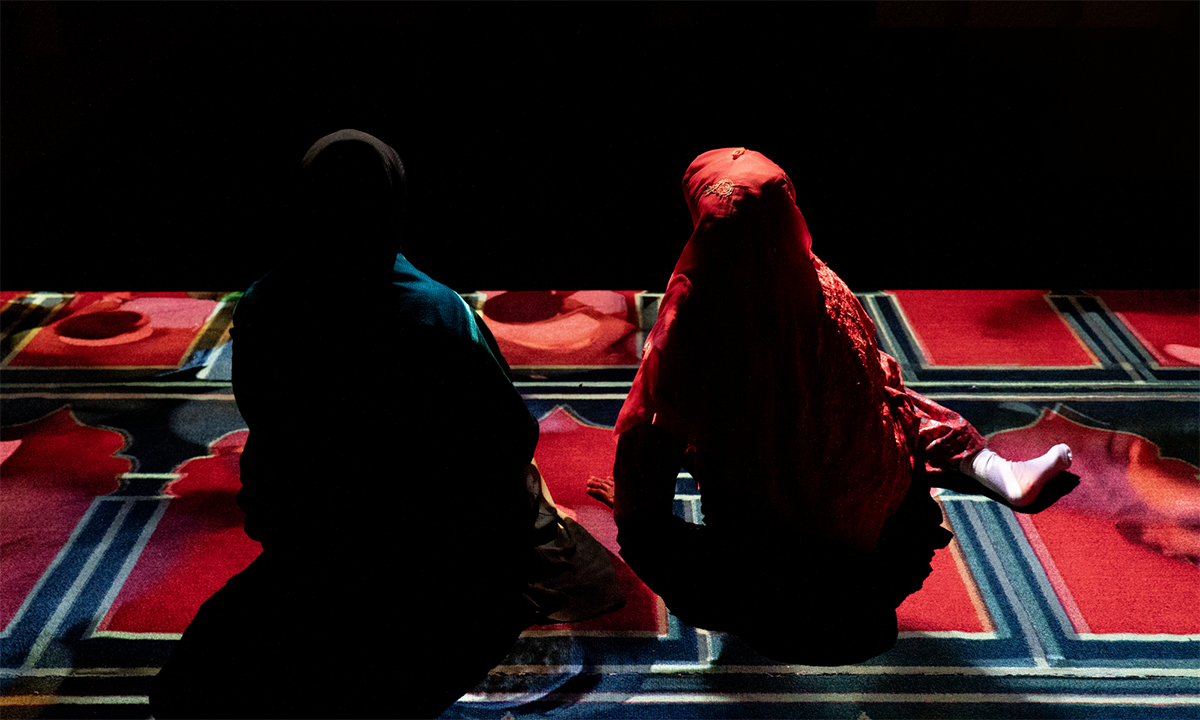
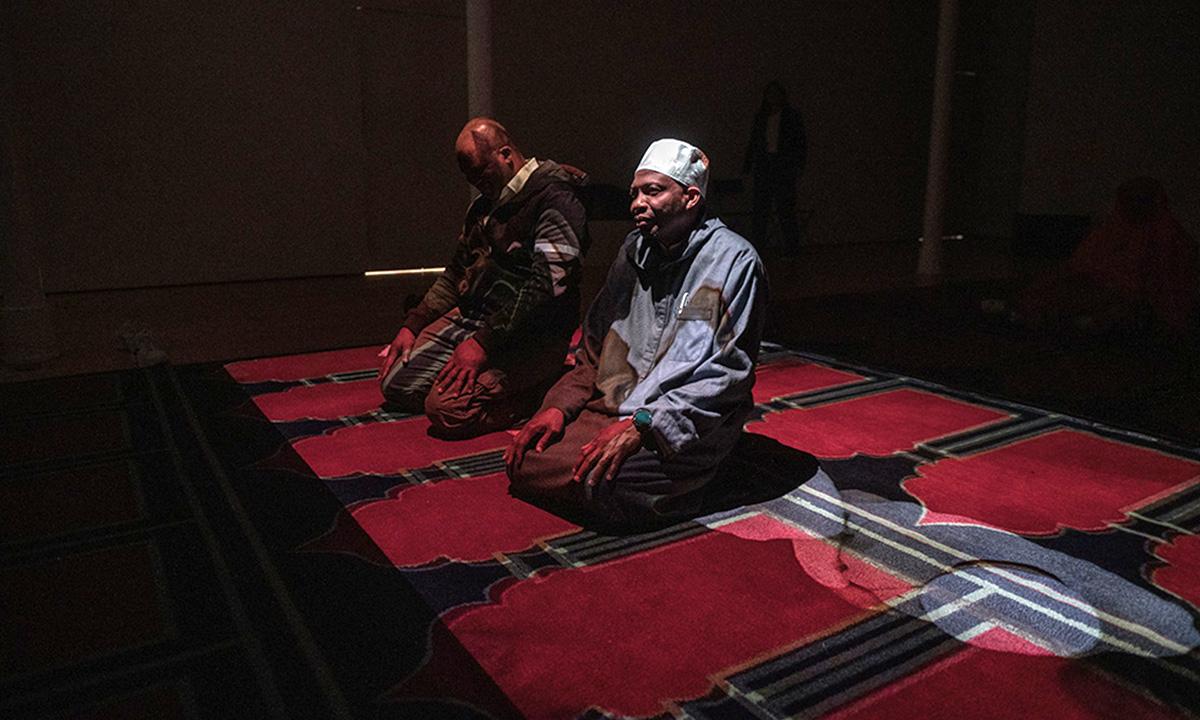
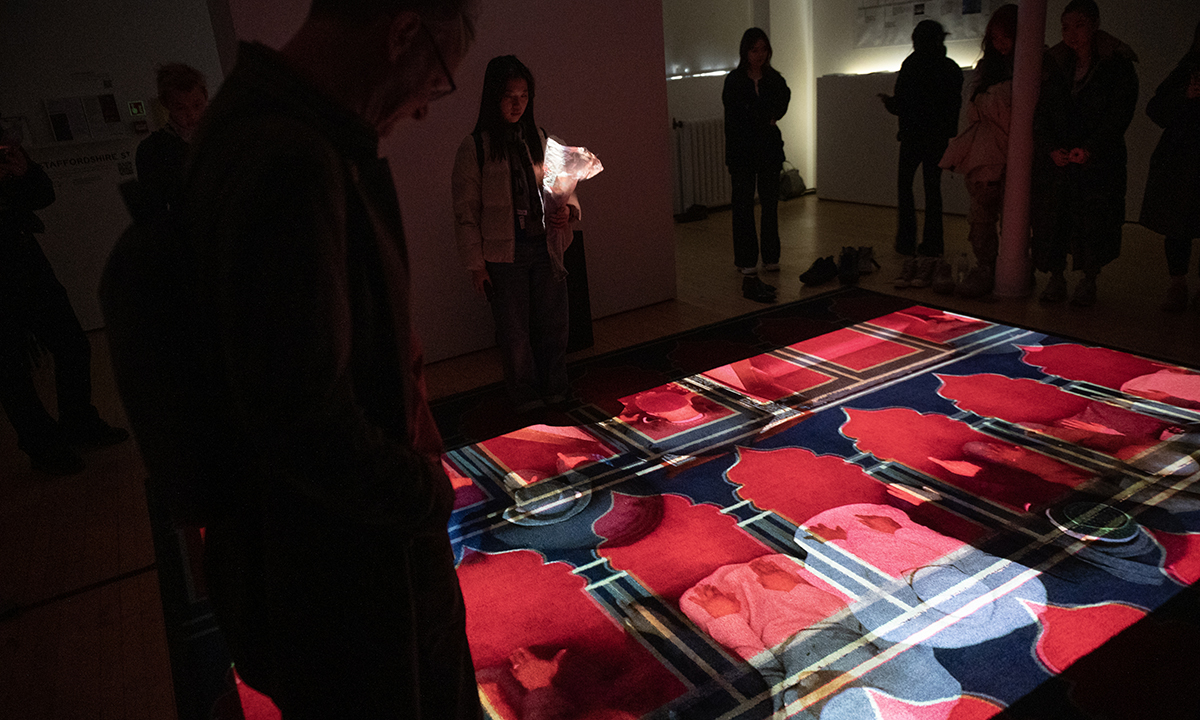
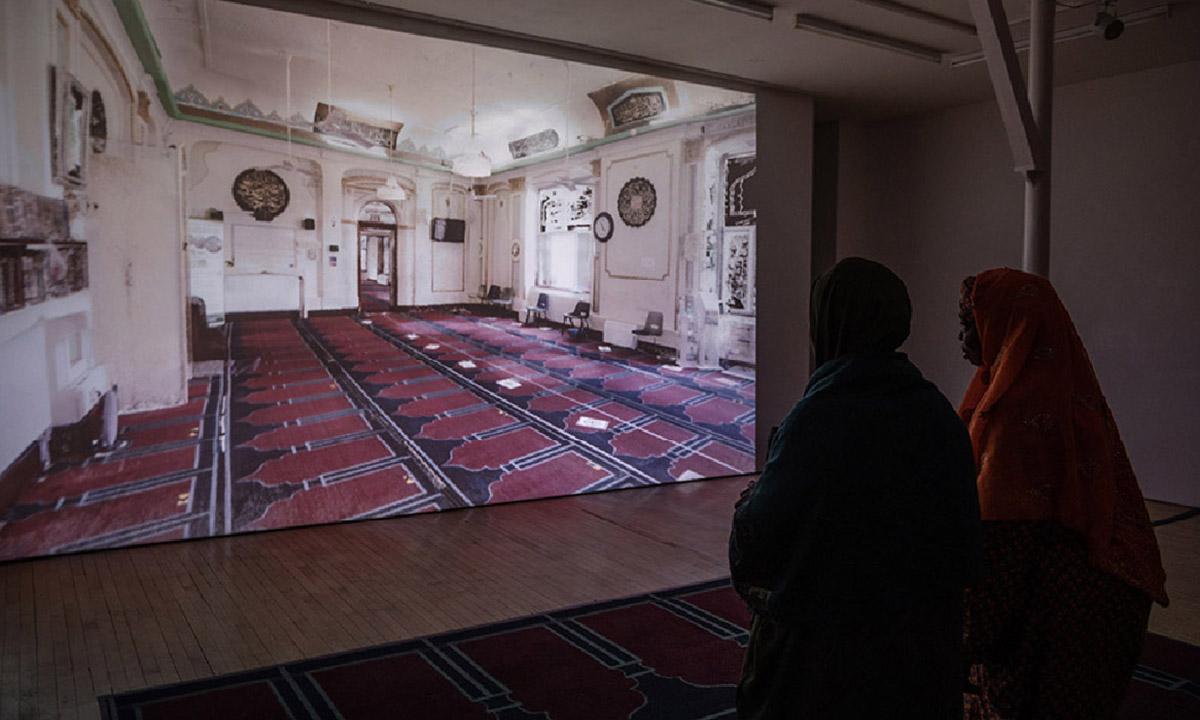
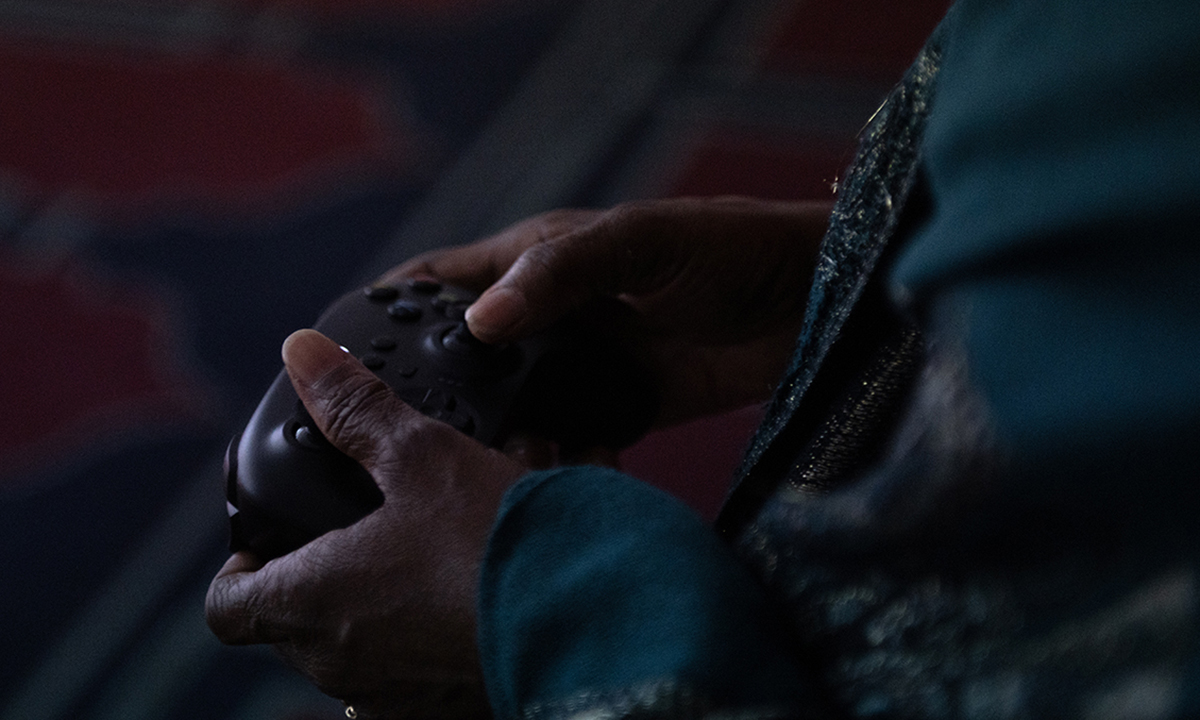
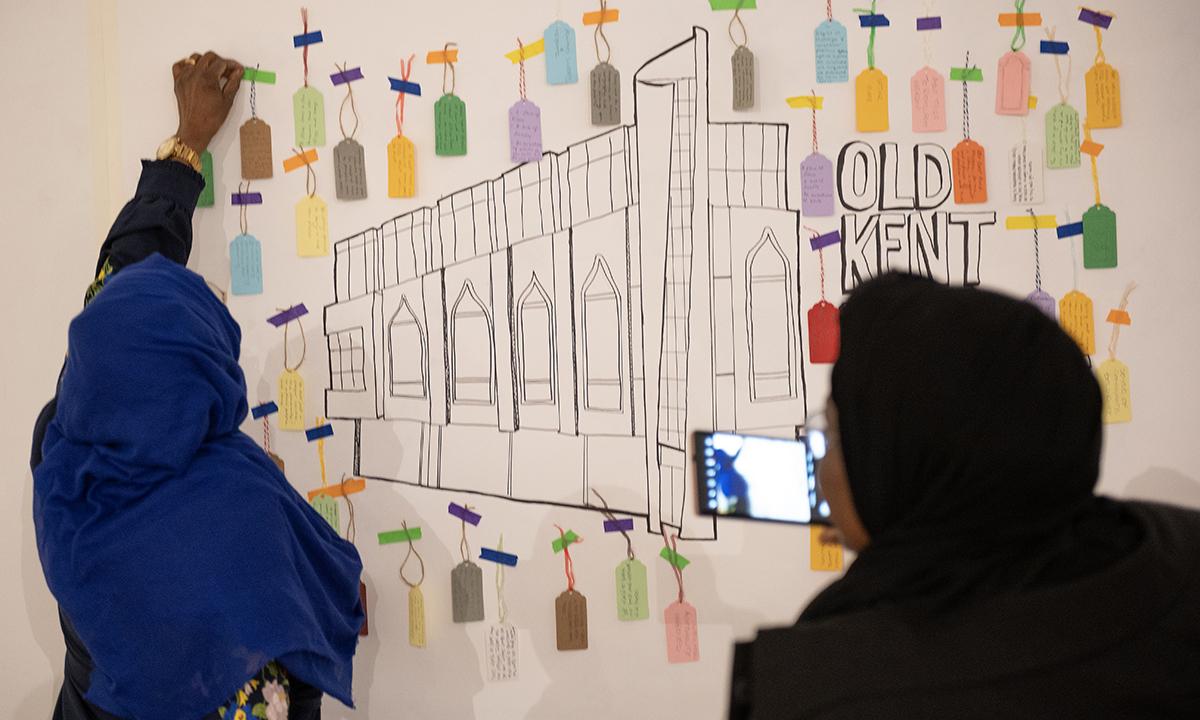
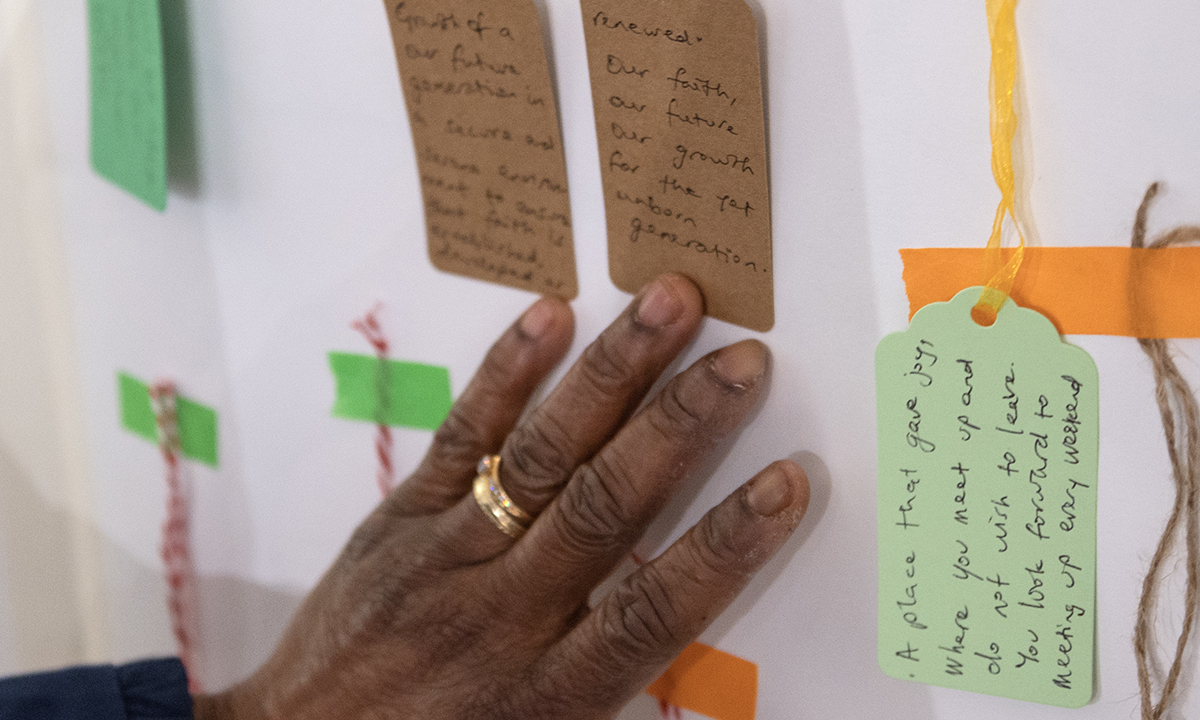
Faith, Place and Migration features two expanded moving image installations developed through a five-year collaboration with the Old Kent Road Mosque congregation (MANUK) . The first installation, Assembly (2024), filmically performs Islamic prayer through a moving floor projection. Filmed and originally exhibited within the mosque itself, the work serves as a record of the final Jumu’ah (congregational) prayer before the building’s closure. For the exhibition, the film projects into Staffordshire St, bringing together the mosque congregation and wider community through the re-performance of communal prayer. The second installation, Virtual Assembly (2023), presents an interactive 3D model of the mosque, hosting stories and reflections from congregation members. Visitors navigate the virtual site using a controller, triggering personal accounts that reveal the lived experiences and embodied knowledge of the community.
More Info
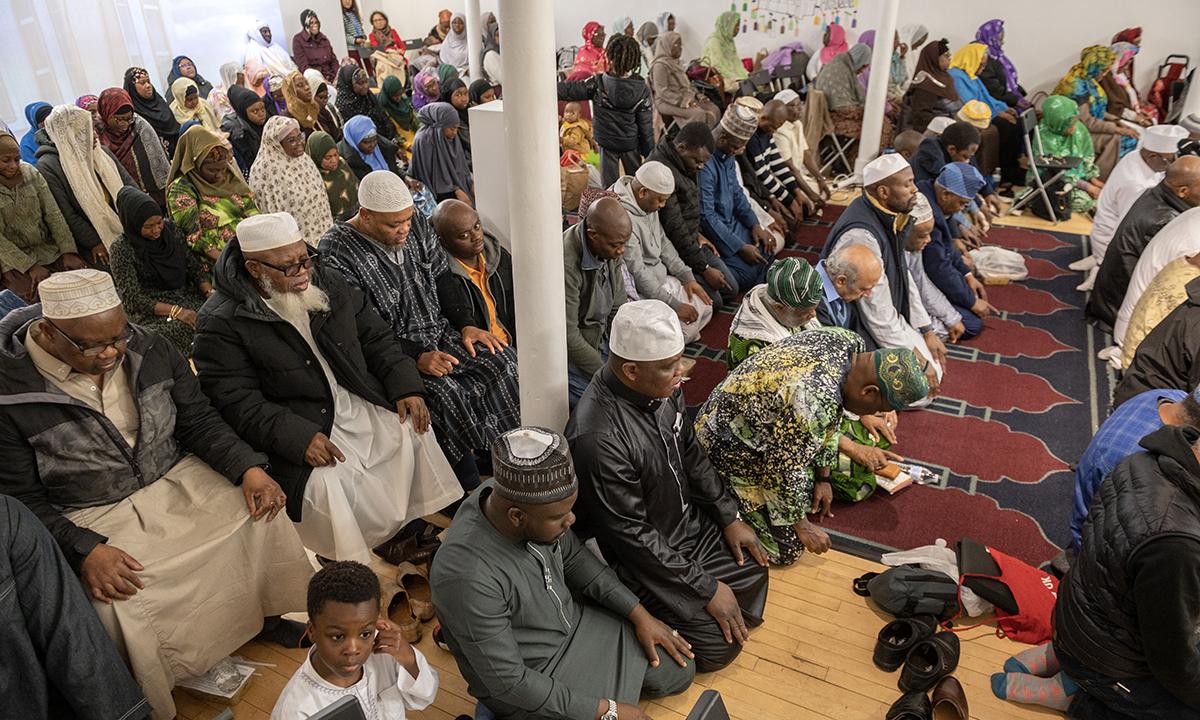
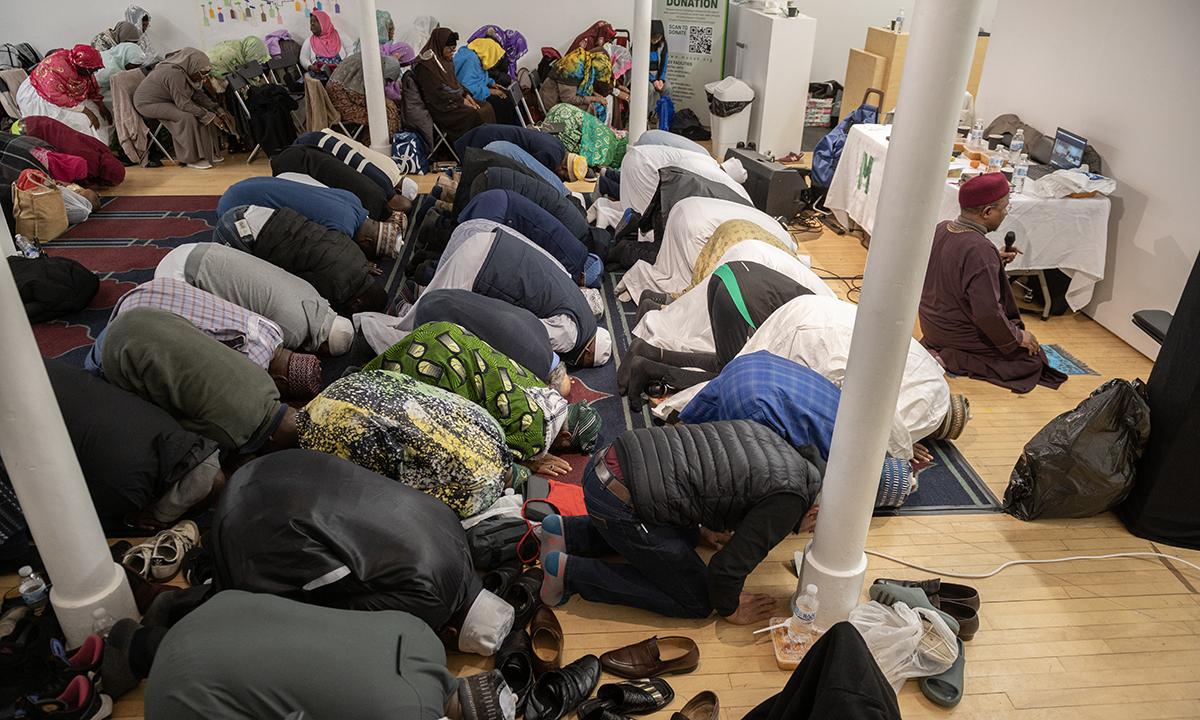
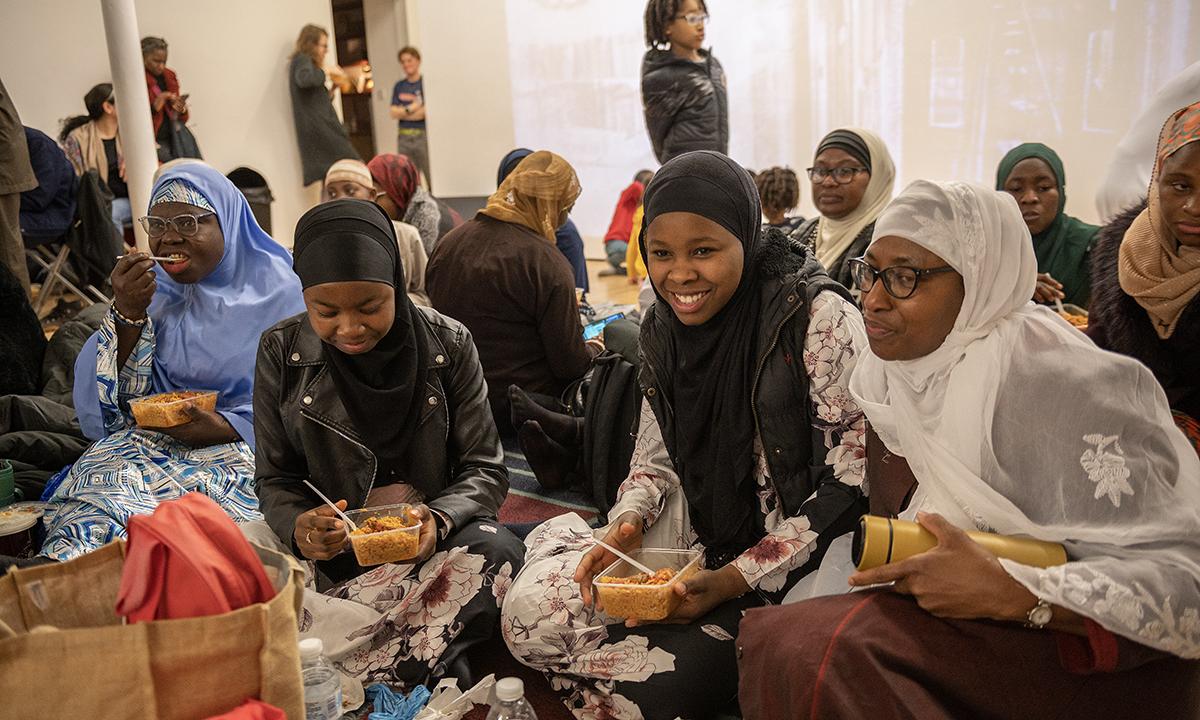
Alongside the exhibition, a public programme co-curated by Shahed Saleem deepened engagement between the Old Kent Road Mosque congregation and the wider community. An Open Iftar was hosted at the gallery, beginning with a Tafseer and followed by a communal fast-breaking meal. During this evening, the gallery was temporarily transformed into a prayer space, echoing the histories of migration, adaptation, and renewal that underpin the community’s story. In this act of transformation, a former Methodist hall — now a contemporary art gallery — briefly became a living mosque, blurring the boundaries between sacred and secular, past and present. This moment of collective worship and breaking of the fast extended beyond the physical space, embodying the idea that faith is not fixed to a single site but carried in the practices, memories, and relationships of those who gather. The event invited congregation members and the wider public to come together in an experience of shared presence, a symbolic gesture of resilience and continuity.