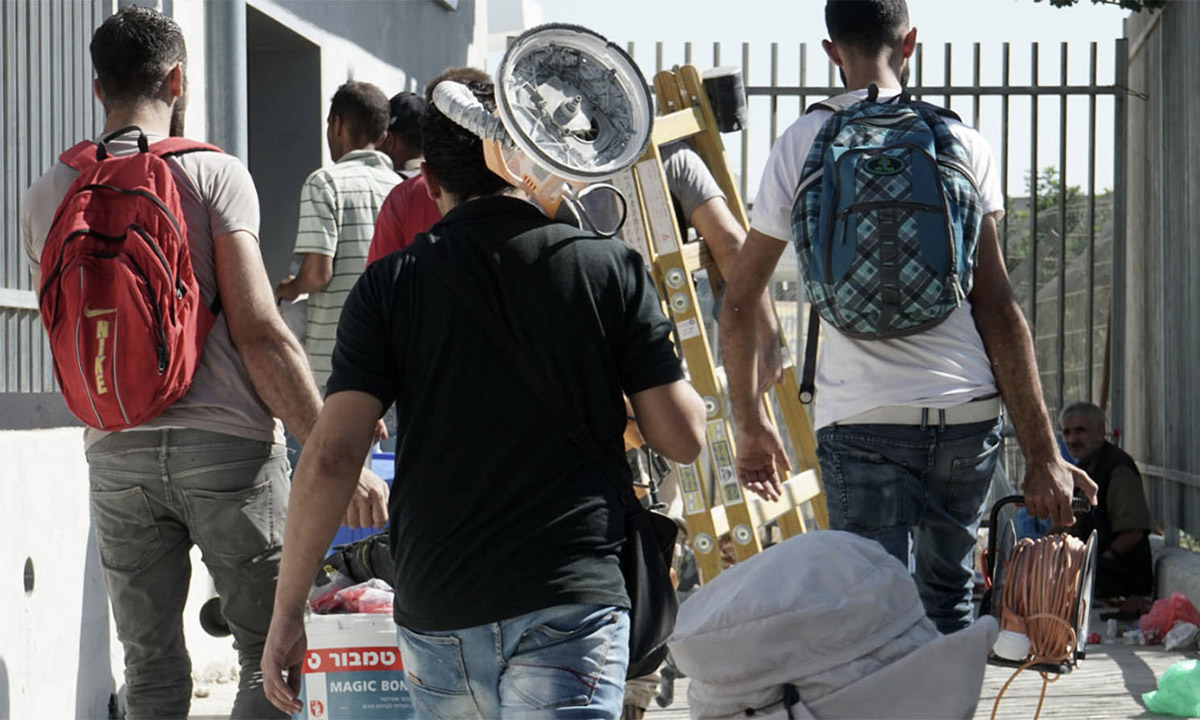
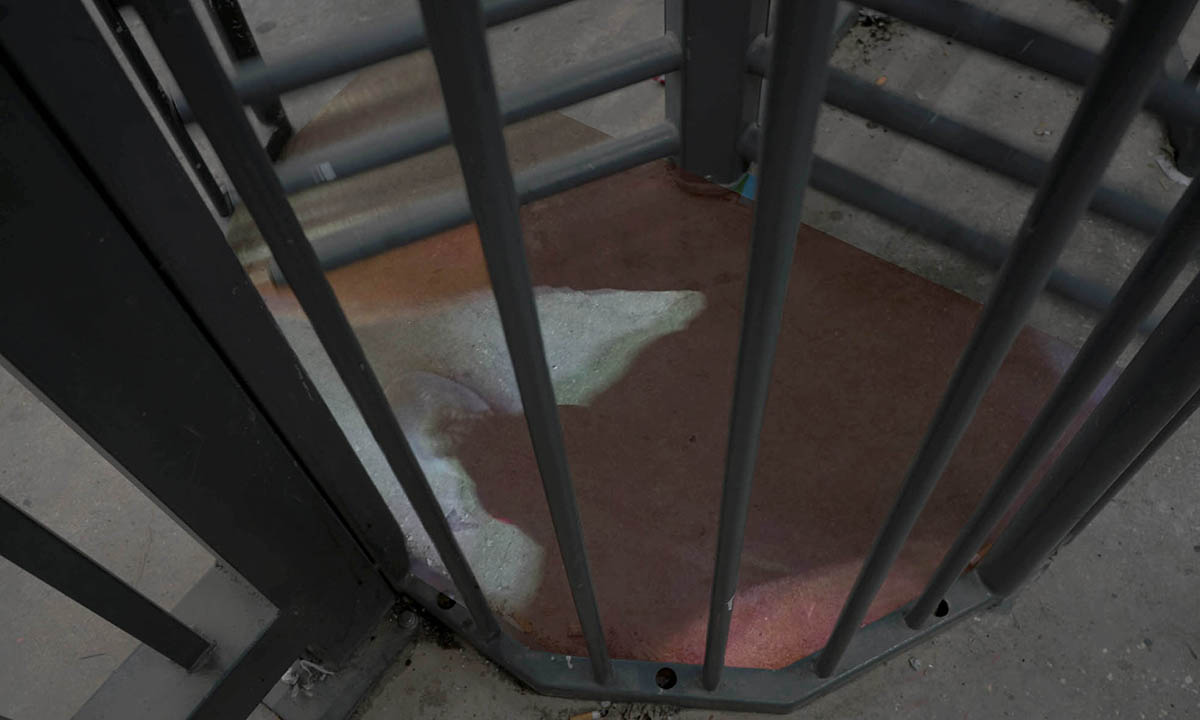
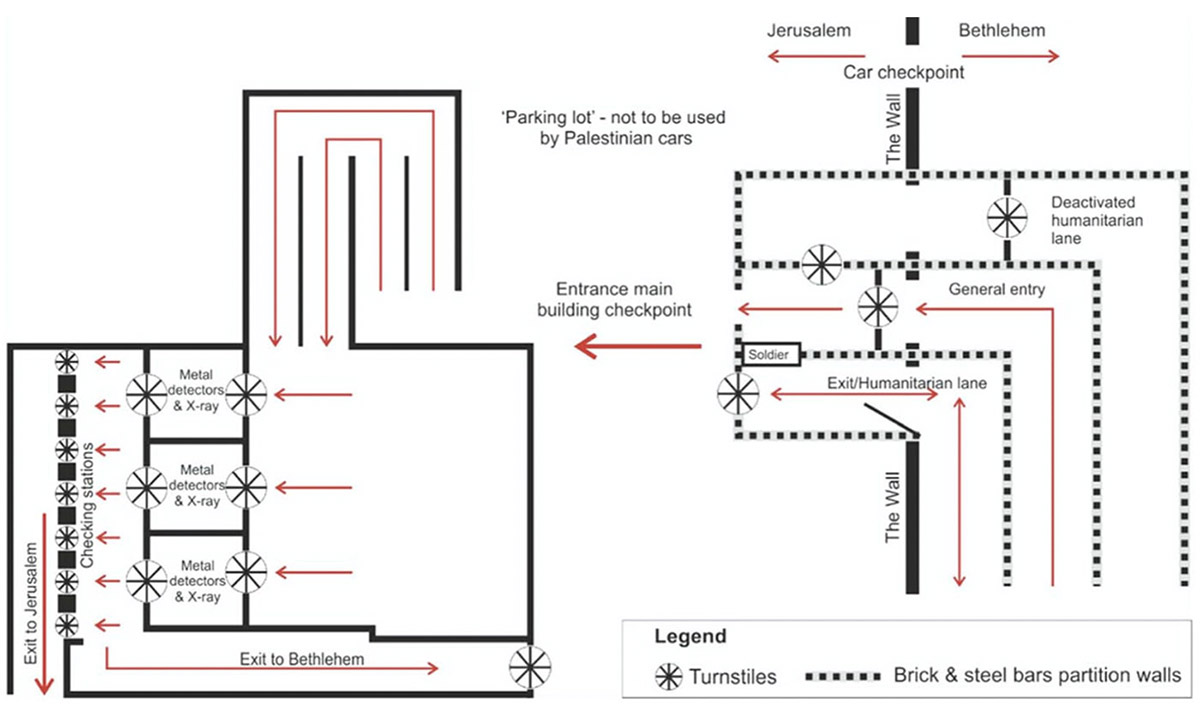
Checkpoint 300 is a site-specific film produced through practice-led fieldwork within the main turnstile at Terminal Checkpoint 300 in Bethlehem. The crossing, in its current configuration, is established in 2005 as part of Israel's separation wall. Each day, thousands of Palestinians from the southern West Bank pass through this barrier to reach workplaces in East Jerusalem. The project approaches the checkpoint as a site where filmmaking operates as a method for spatial and political enquiry.
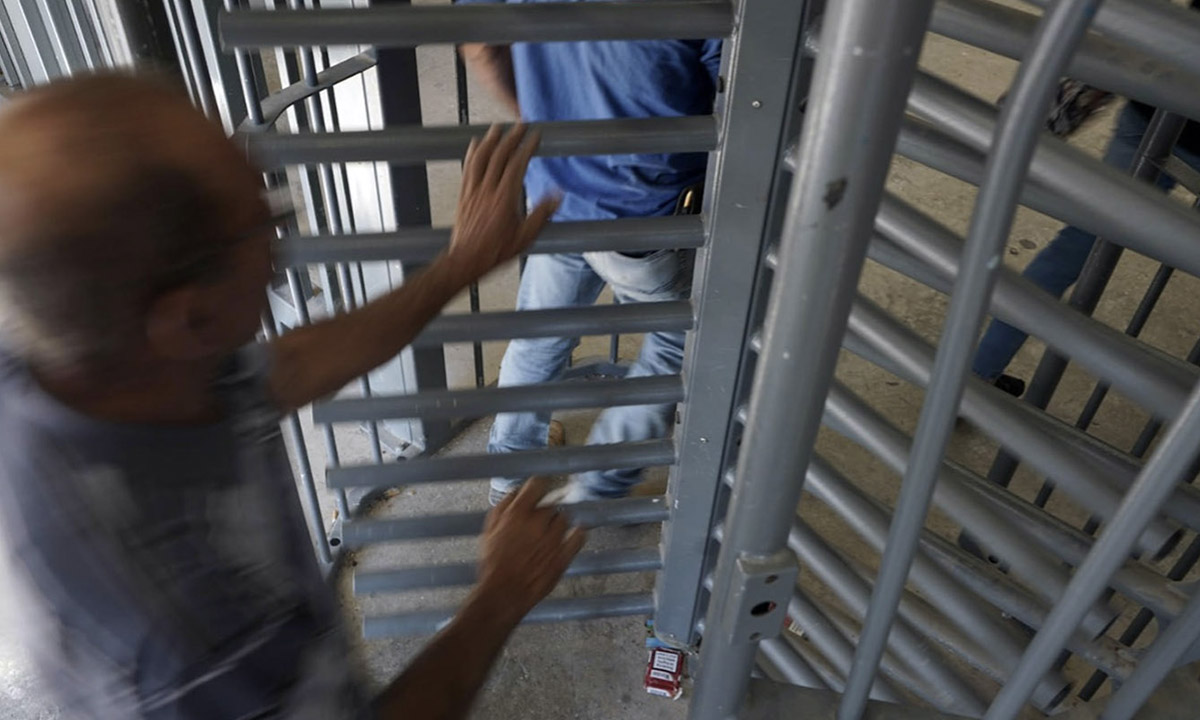
The turnstiles at Checkpoint 300 play a crucial role in managing and regulating the flow of people. They are constructed with steel arms that measure only 55 cm in length—approximately 20–25 cm shorter than the standard turnstile arms commonly used elsewhere. As noted by architect and theorist Eyal Weizman (2007), the reduced arm length is specified to press tightly against the bodies of commuters, making it more difficult to conceal objects under clothing. For those required to navigate this space, this design produces intimate and bodily disruptions: parents separate from children, and workers from the tools or equipment they rely on for their jobs. Architecture here functions as a technology of control enacted directly on the body.
More Info
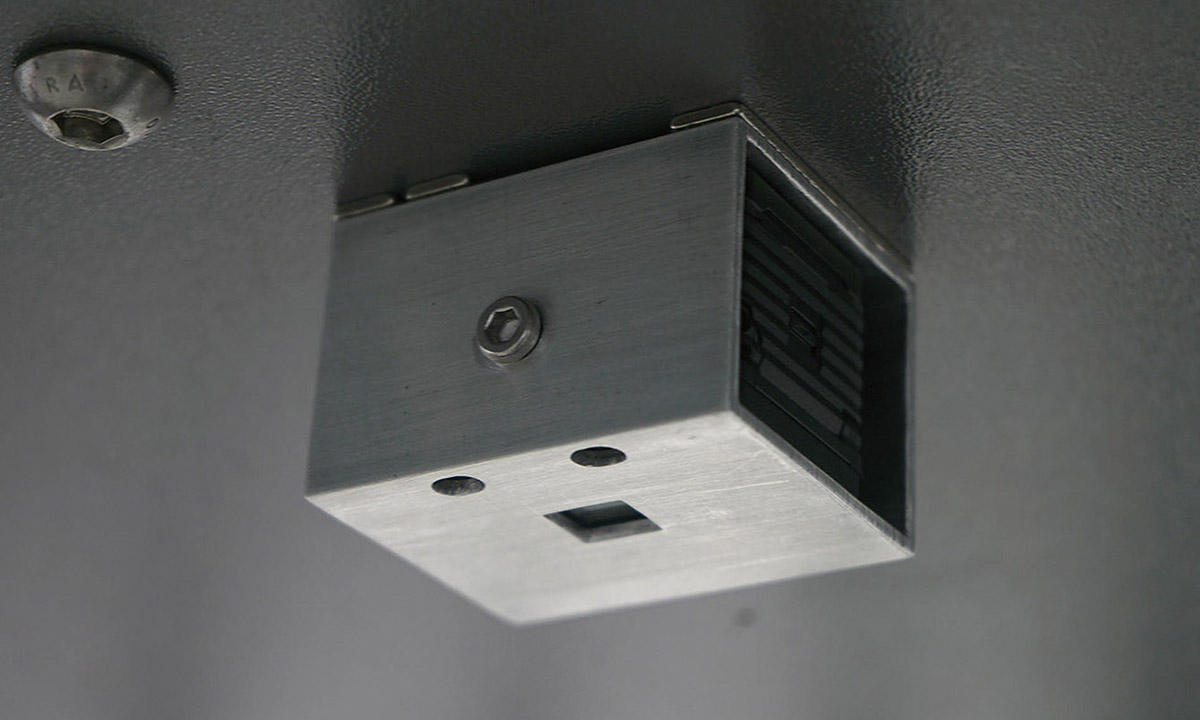
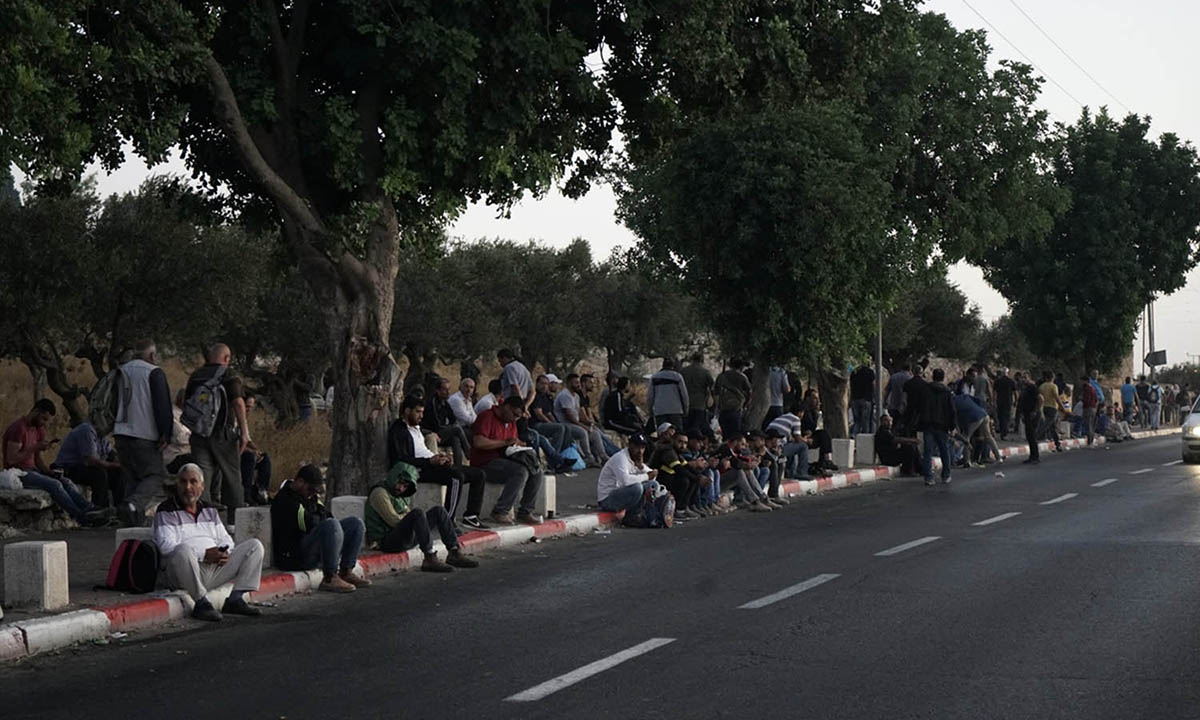
The research centres on sustained fieldwork that explores the rhythms of daily passage at one of the busiest checkpoints in the region. Each morning, between 4,000 and 6,000 workers cross between 4 a.m. and 7 a.m., often enduring waits of up to three hours during peak times. In response, a compact camera rig is purpose-built and discreetly embedded within a turnstile on the Bethlehem side. The device records automatically as each person pushes through, capturing repetitive, compressed, and constrained movements from within the mechanism itself.
By situating the camera inside the architecture, the film treats the turnstile as both recording device and research instrument. This embedded perspective reframes the structure not simply as a point of passage but as a spatial–political technology that regulates, fragments, and choreographs everyday mobility under occupation. Through this practice-led method the project generates situated knowledge about how control is materially enacted, using the moving image to examine the relationship between body, infrastructure and power.