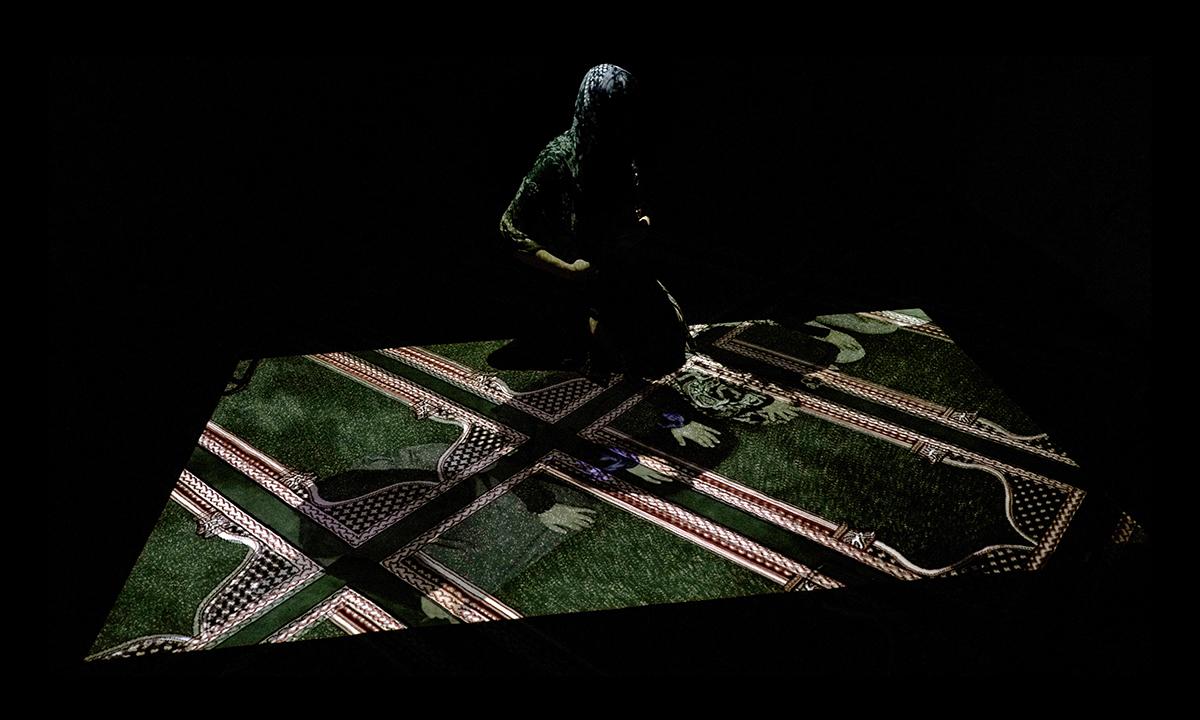
Assembly is a series of site-specific installations developed through a practice-led research project in collaboration with three London mosques — Brick Lane Mosque, Old Kent Road Mosque, and Harrow Central Mosque — examining how religious space, collective movement, and embodied ritual shape social life and belonging. The project investigates how immersive, site-based installation deepens worshippers' self-awareness, strengthens connections within and between communities, and reshapes participation, meaning, and access when art is situated within the mosque rather than the gallery.
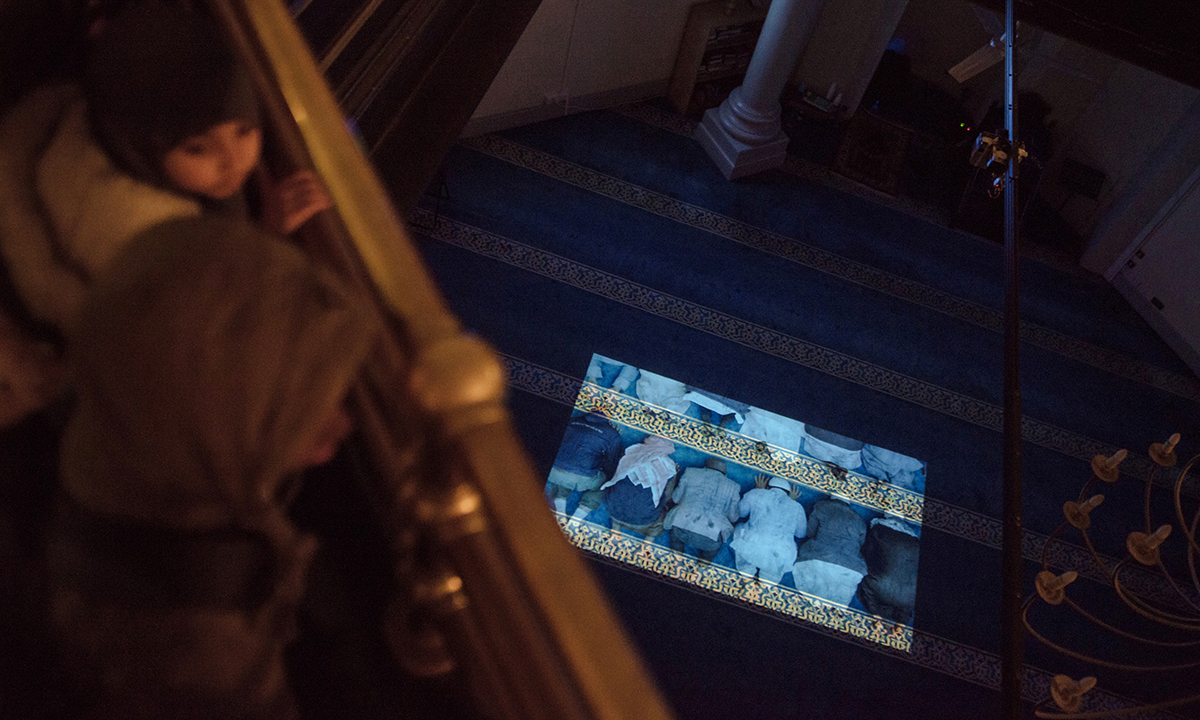
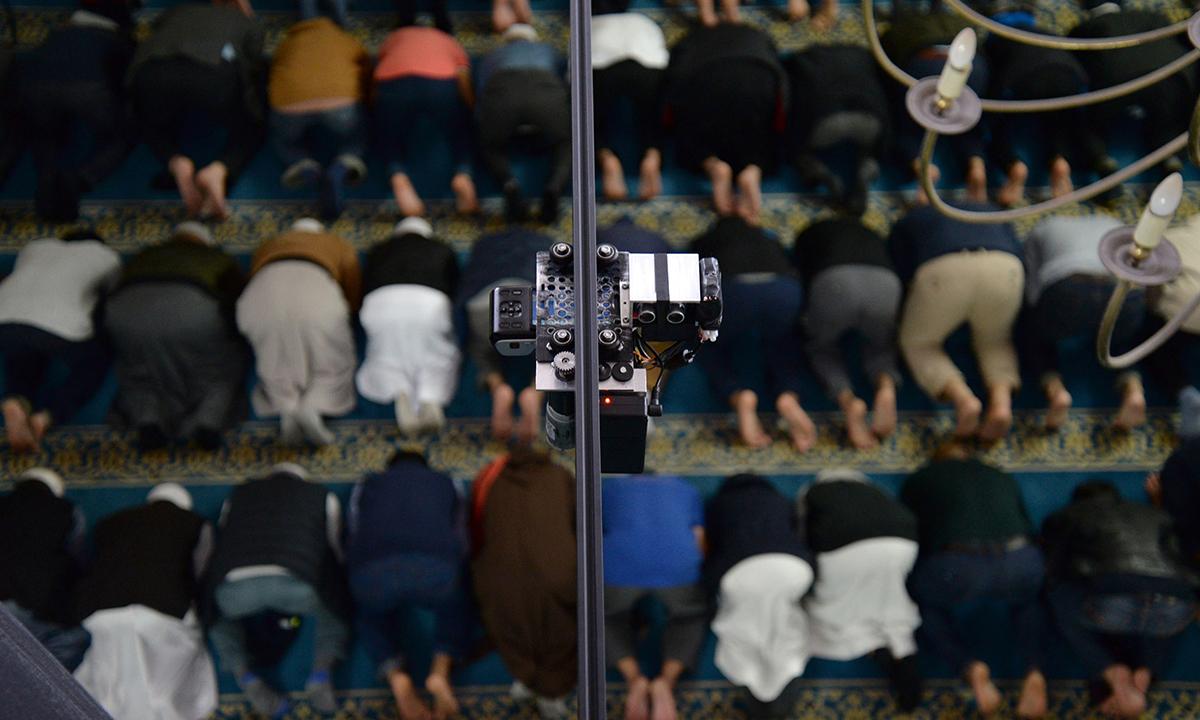
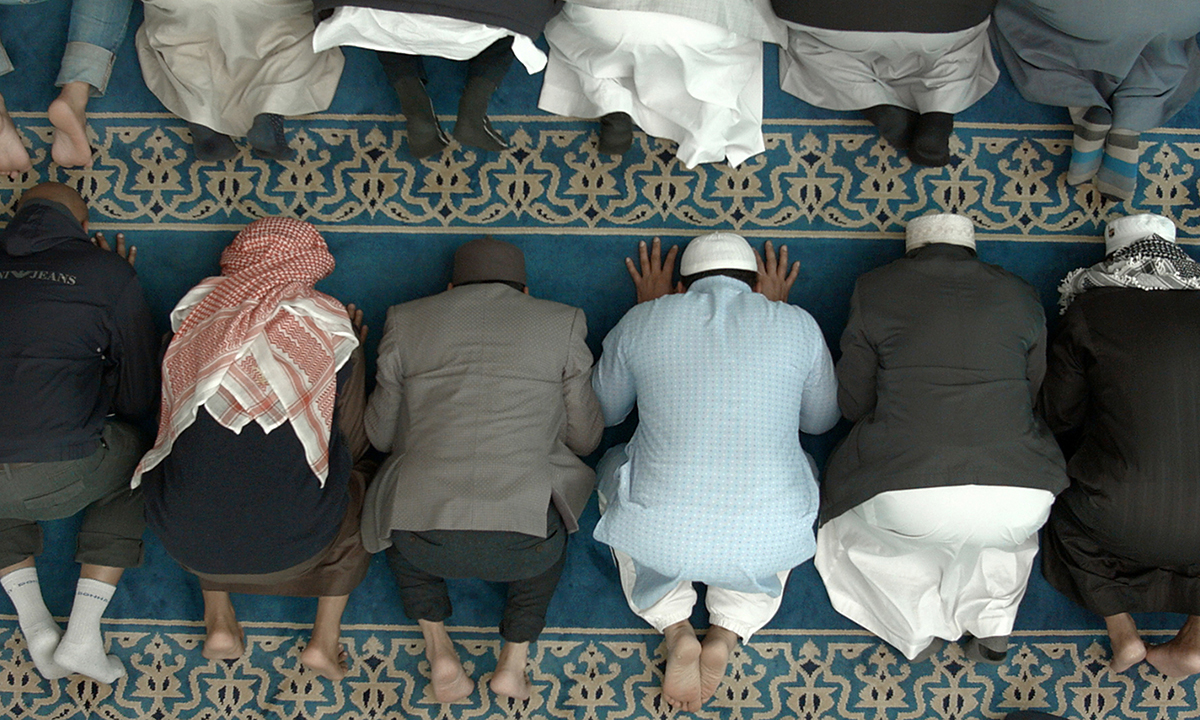
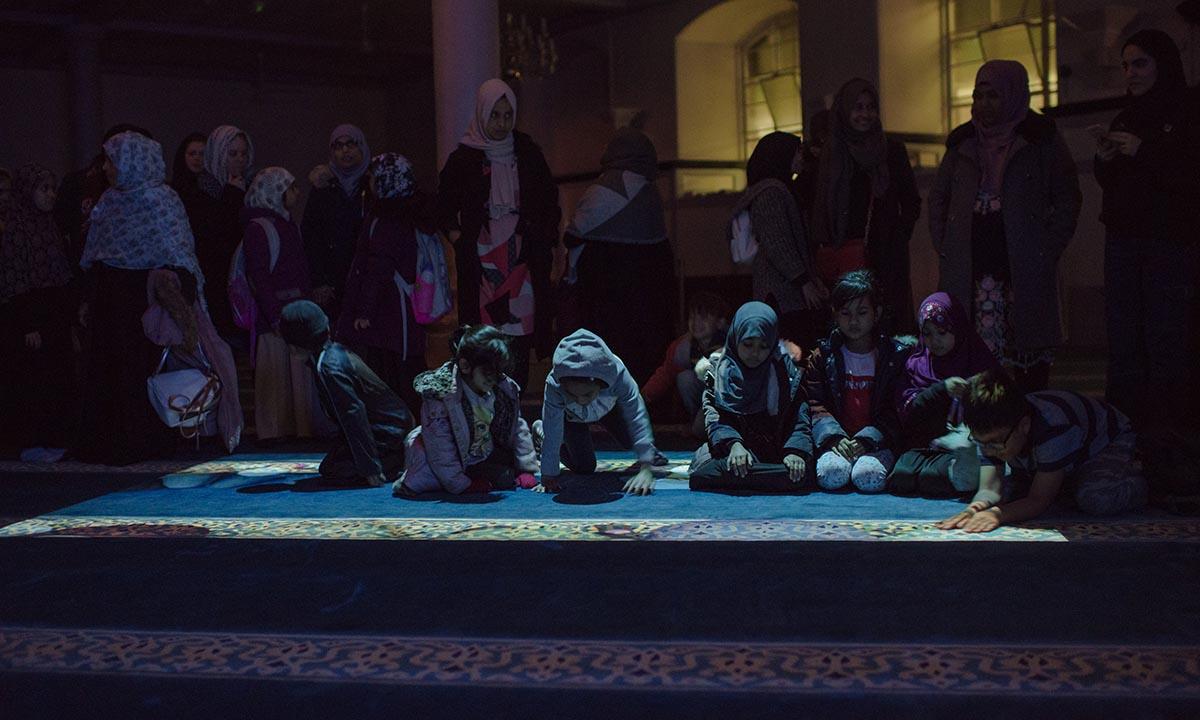
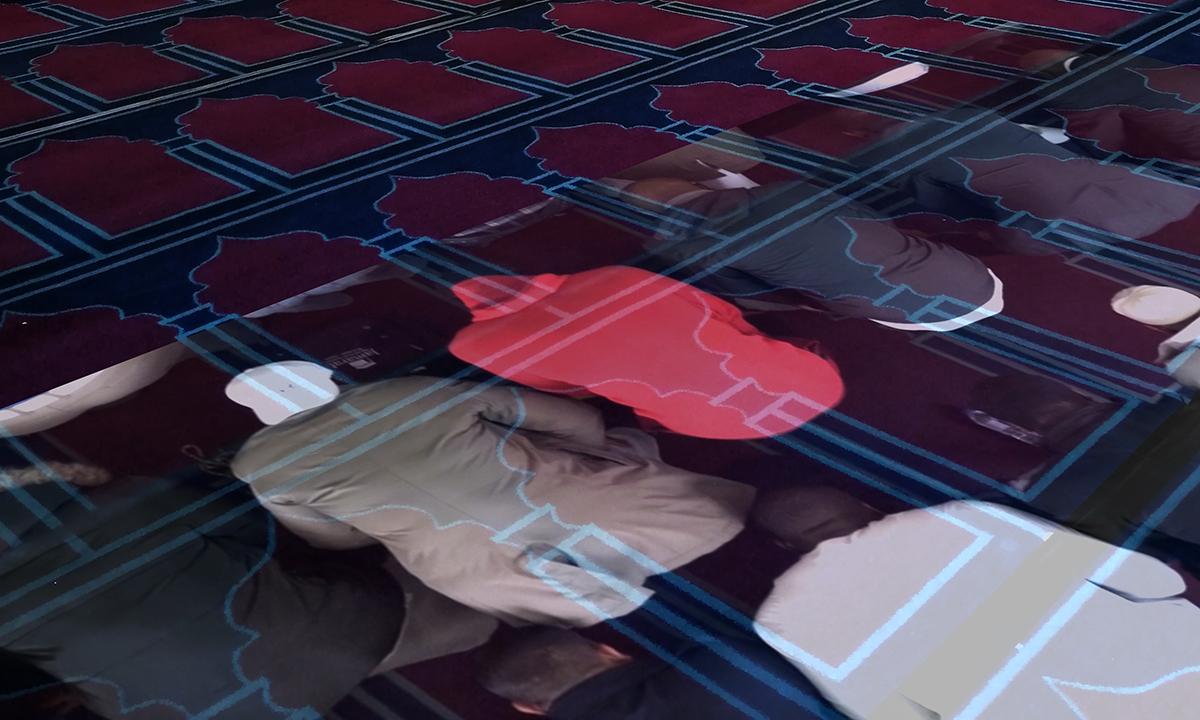
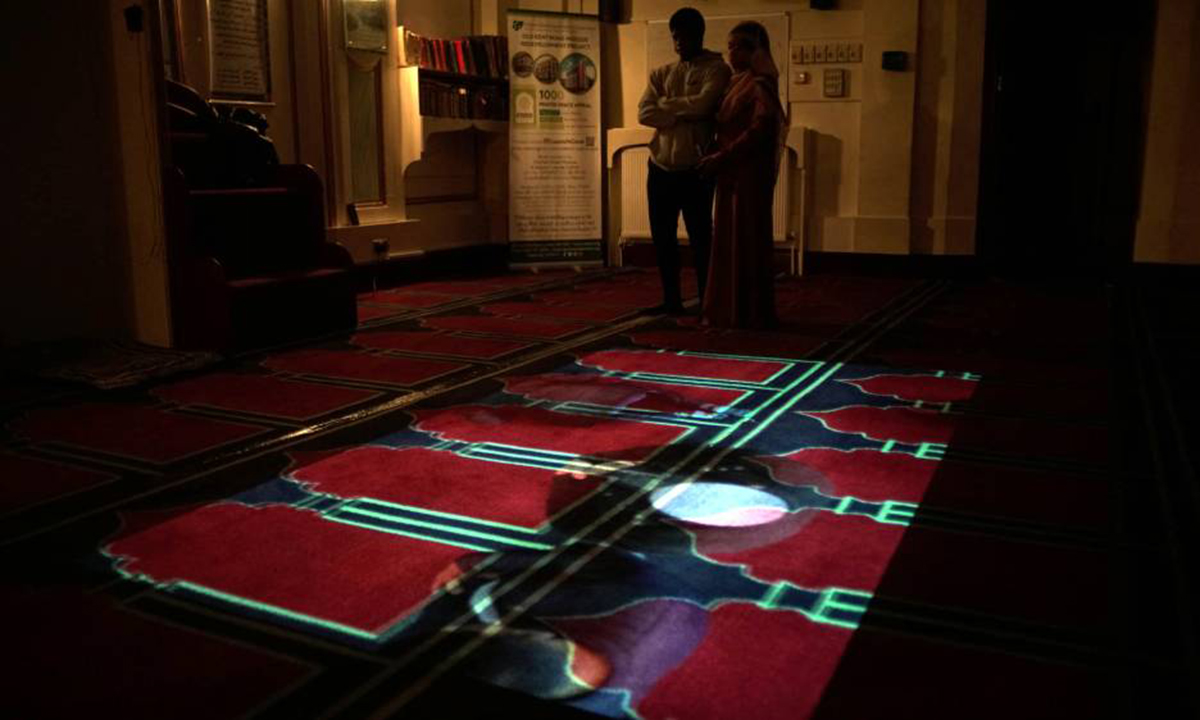
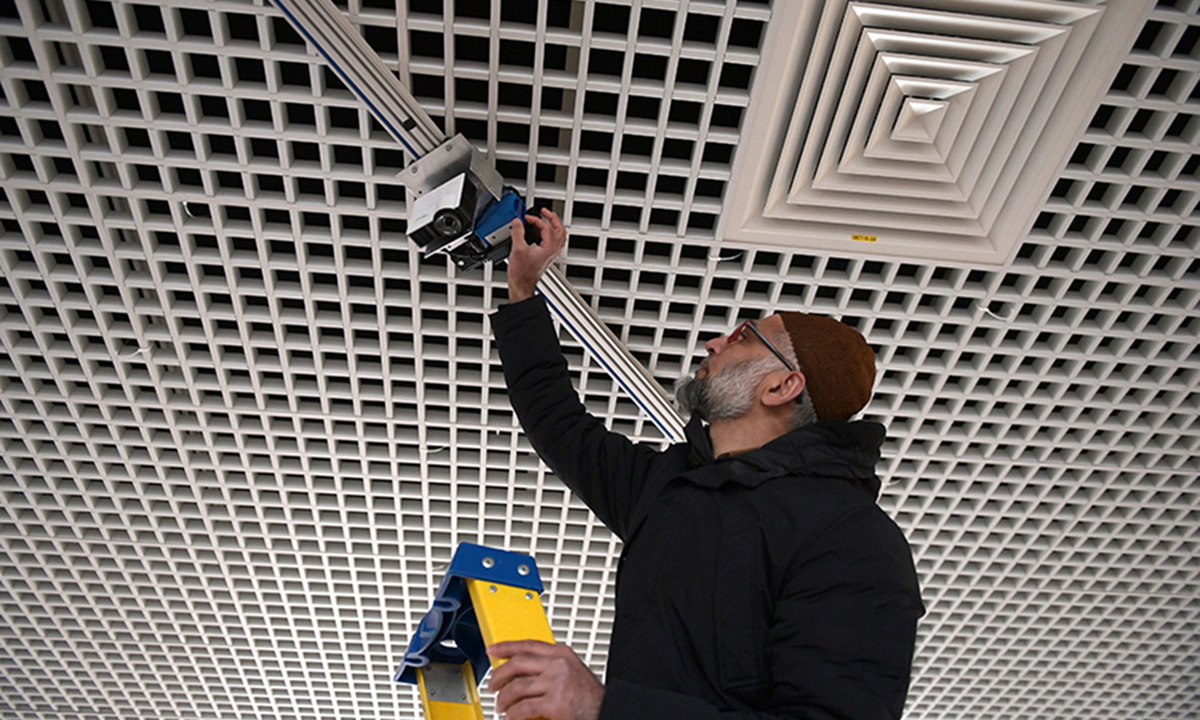
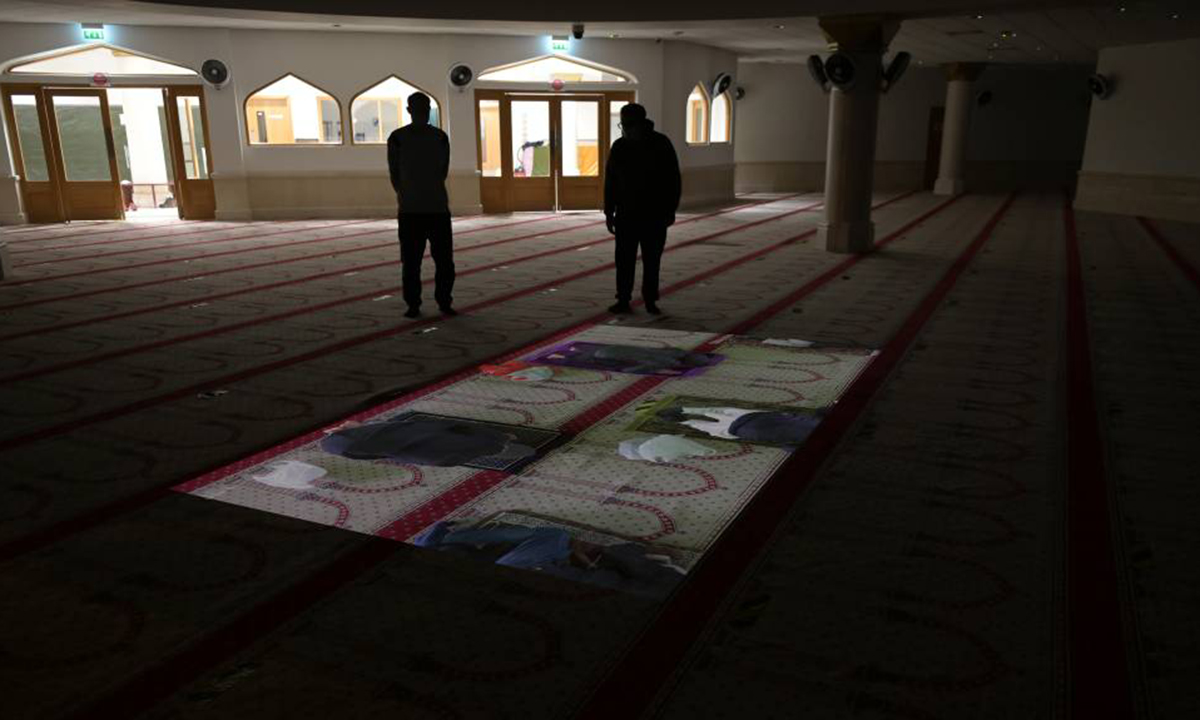
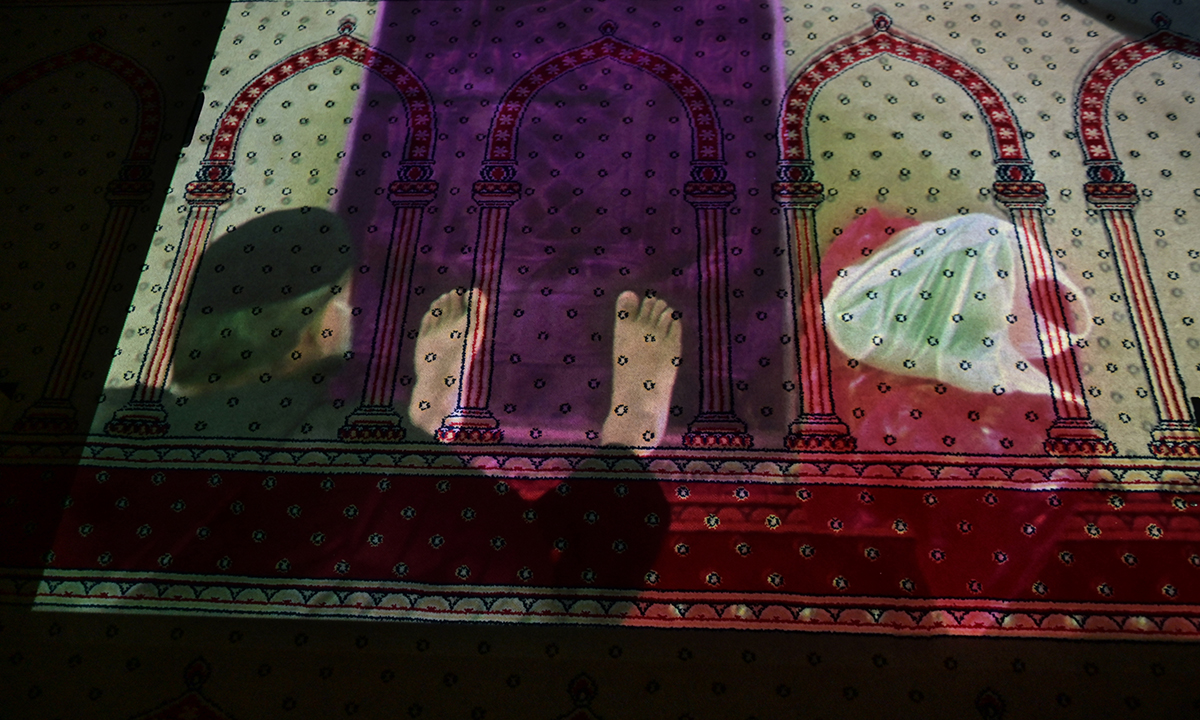
Working collaboratively with each congregation, the research establishes ethical and non-intrusive protocols for filming during Jumu'ah (Friday) prayer. Custom motorised camera rigs are designed and installed to record the prayer from an aerial perspective, and the resulting footage is projected back onto the same carpets where the prayers take place, returning the image to the site and creating a shared space for collective reflection. The aerial viewpoint is not a neutral technical decision but one developed in consultation with each congregation. While in film language such a perspective can imply surveillance or overview, within the mosque context it instead resonates with theological understandings of divine witness and collective accountability. Designing the camera choreography in response to these beliefs ensures that the method itself remains culturally and spiritually situated, with religious knowledge actively shaping how the film is made. The same footage is precisely remapped to the site at scale using the original overhead motorised device. Rather than simply documenting worship, the installations function as performative research environments. By replaying collective movement within the space, congregations view, inhabit, and critically reflect on their own embodied practices. Filmmaking and projection therefore operate as analytic tools, generating new insight into how prayer is structured spatially, socially, and physically.
More Info
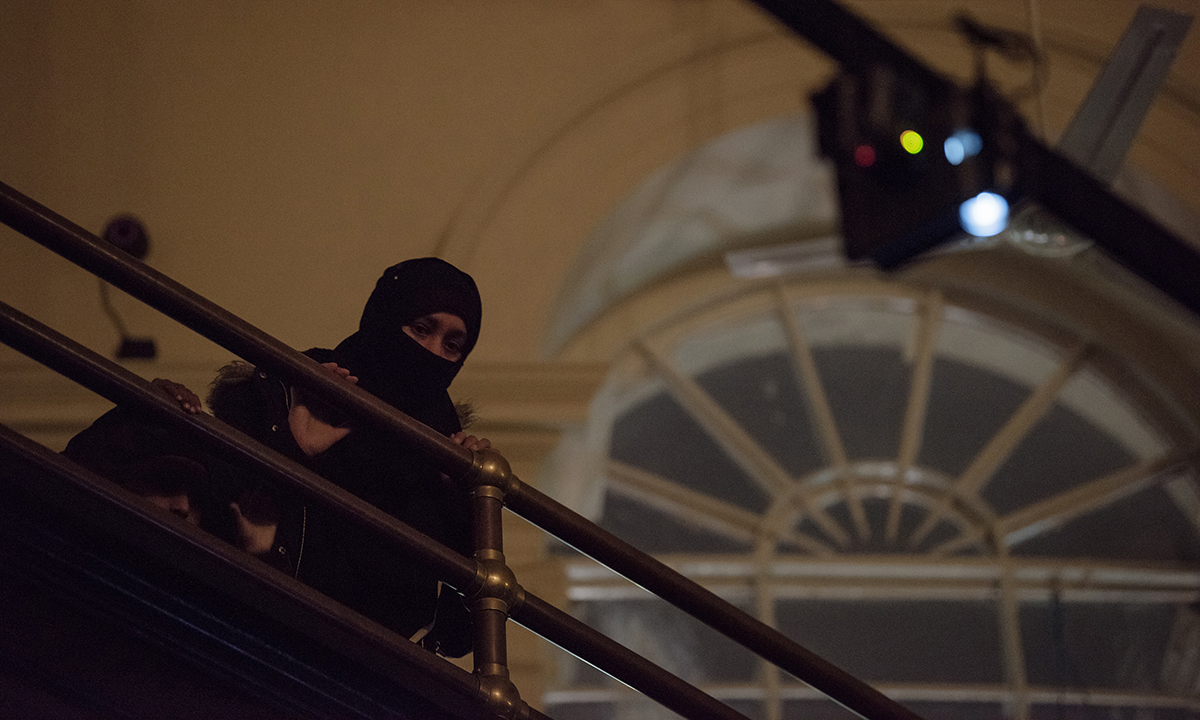
Reflections from congregants indicate heightened awareness of the physical and repetitive dimensions of prayer, revealing aspects of embodied practice that often go unnoticed. As one member observes: "The projection opened my eyes to the physical act of prayer, of movement and repetition. Because my view or senses are often fixed on a focal point (the imam), I hadn't really considered my own movements. But in the core of Islamic thought, it is the worshipper's movements that are essential." Across the residencies, the work produces tangible social and spatial impacts. Opening the mosque after prayer creates new forms of access, including women entering the main prayer hall for the first time. Public events welcome both Muslim and non-Muslim visitors, reframing the mosque as a shared civic space and fostering dialogue across communities. Partnerships with the Muslim Council of Britain, Inclusive Mosque Initiative, and Inter Faith Network for the UK extend the project's reach and strengthen local networks of collaboration.